
Contradictions Included: Notes from the Greenbrier (Part I)

Or Venmo me directly, as the founders intended.

Contradictions Included: Notes from the Greenbrier (Part I)
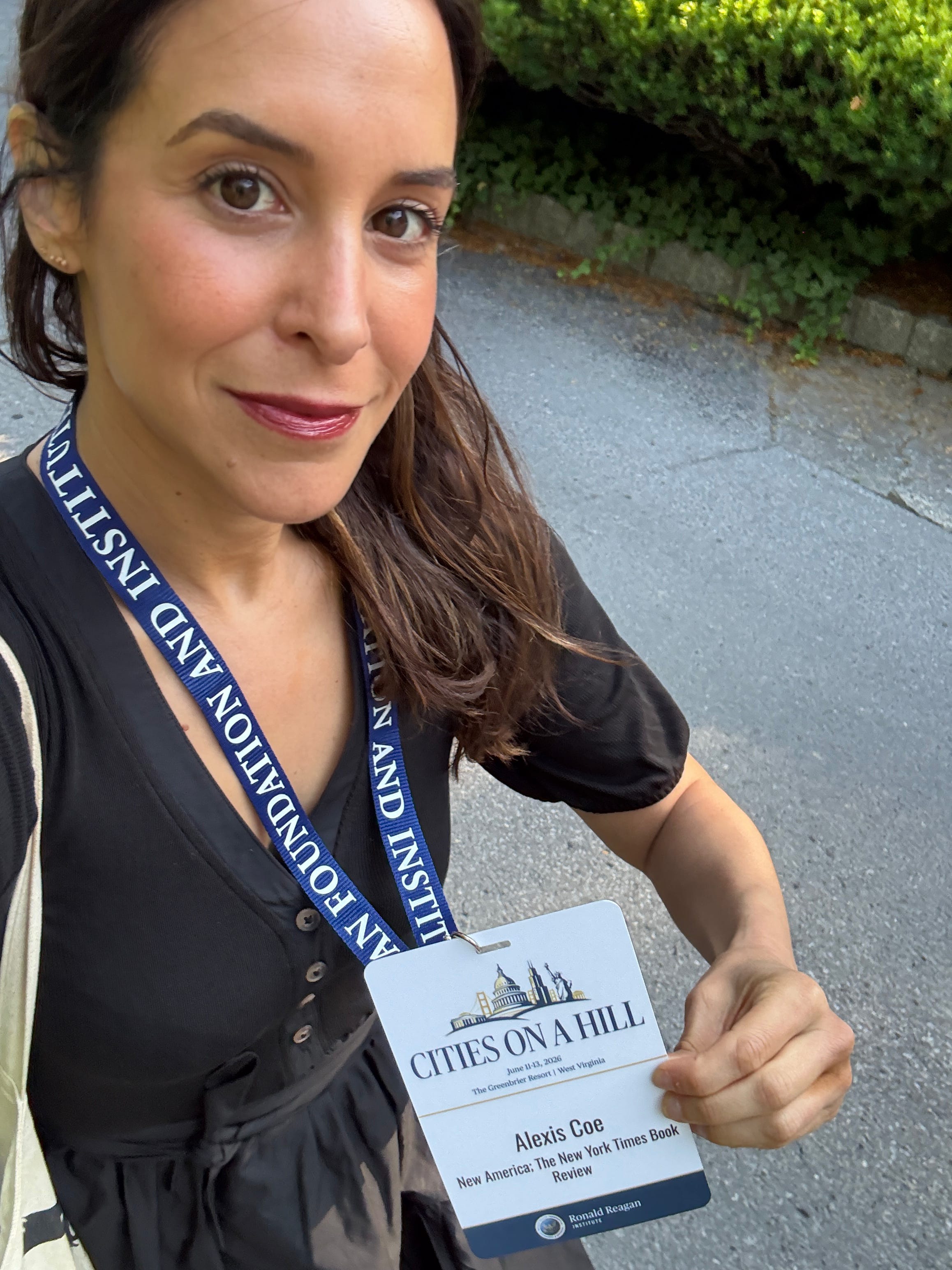
Last week, I attended the inaugural gathering of think tank fellows, Pulitzer Prize winners, public historians, and a few people who resist any neat label, at the Greenbrier in Sulphur Springs, West Virginia.1
The meeting operated under Chatham House Rules: participants are free to discuss the ideas exchanged, which I’ll do here, but not identify who expressed them. The premise is that anonymity encourages candor and, more interestingly, it strips away the usual cues that help us decide what to think by removing the biography.
After nearly sixty hours of papers, debate, disagreement, and consensus among people and institutions that rarely share a room, it was my turn. Alongside the head of a major cultural institution, I was asked to summarize and comment on everything we’d covered. No pressure.
Over the next few weeks, I’ll share some of the questions we felt best represented our time at Greenbriar. None are new but, like iron filings to a magnet, every conversation seemed to find its way back to them.2
First up: How do Americans tell their national story? Or, more to the point—who gets to?
A country this large, this diverse, and this argumentative does not naturally produce a single national narrative. Nevertheless, Americans remain committed to the project.
The result is a familiar tug-of-war: celebration versus critique, hagiography versus cynicism, “greatest nation on earth” versus “it’s complicated.”
At the center sits American exceptionalism—the belief that the United States is not merely different from other nations, but somehow exempt from the usual rules of history.3
American exceptionalism is most often an instinct: the conviction that the United States occupies a special place in history. We called this chosenness, which rarely lingers over the evidence.
The conversation changes if we focus less on the land itself—the continent, the frontier, the city on a hill—and more on the people. What did Americans do with that supposed exceptionalism? What did it produce? What did it excuse?
Historians are wary because the distance between exceptionalism and nationalism can be surprisingly short. One asks whether a nation is unique; the other often assumes it is superior.
We’re also used to asking a question our counterparts often skip: what if exceptionalism isn’t true? We can’t answer that, but we can insist that it be a question, not a given.
Then there’s “original originalism.”4 We may be living through an age of judicial authority untethered from democratic confidence, where some jurists—Justice Thomas is the clearest example—appear to place more faith in a particular reading of the eighteenth century than in the judgment of twenty-first-century voters.
The logic is circular and powerful. The people consent to leaders. Those leaders invoke the past. The past, in turn, becomes a warrant for limiting what the people may do in the present.5 They use it to turn majority rule into something more illiberal.6
There are other models. The Northwest Ordinance, for example, treated self-government as something that had to be built, not merely proclaimed. Schools. Rights. Institutions. The scaffolding of democracy? 7 We could stand to revisit that as inspiration, not relic.
The deeper problem is that Americans struggle to live with contradiction, and there are few models in the Trump era, but it’s essential to understanding our story. The same founder could expand freedom and deny it. The same document could be visionary and exclusionary. These aren't anomalies in the founding story—they are the founding story.
Without the ability to hold competing truths at once, patriotism curdles. History becomes either a shrine or a crime scene, and that’s no way to live.
See you next week! In the meantime, you can find me on Twitter and Instagram and my books, as well as others mentioned on SMK, on Bookshop, Amazon, and your local bookstore or library. If you have a question or comment, I want to hear it! studymarrykill@gmail.com.
A think tank fellow or senior fellow is a researcher or expert at a policy institute who studies issues, writes reports, and advises on public policy, usually outside of a university setting.
A public historian who works outside traditional academia and/or brings history to broader audiences through museums, archives, historic sites, documentary film, journalism, or government.
I’ll briefly define concepts as they arise. If you’d like more on any of them, just ask.
A flattering biography or account that treats its subject as a saint, glosses over flaws, criticism, or harm.
A way of interpreting the Constitution that tries to follow what the text meant when it was written, or what its authors and ratifiers intended at the time.
A judge who uses their power to impose rigid, often anti‑democratic interpretations of the law—limiting the role of voters and elected officials.
Opposed to liberal democratic norms—such as free elections, independent courts, minority rights, a free press—even if it still uses the language or structures of democracy.
The Northwest Ordinance was a 1787 blueprint for turning western territories into equal states, with commitments to civil liberties, education, and a (deeply imperfect) attempt to limit slavery.
Contradictions Included: Notes from the Greenbrier (Part I)
Last week, I attended the inaugural gathering of think tank fellows, Pulitzer Prize winners, public historians, and a few people who resist any neat label, at the Greenbrier in Sulphur Springs, West Virginia.1
The meeting operated under Chatham House Rules: participants are free to discuss the ideas exchanged, which I’ll do here, but not identify who expressed them. The premise is that anonymity encourages candor and, more interestingly, it strips away the usual cues that help us decide what to think by removing the biography.
After nearly sixty hours of papers, debate, disagreement, and consensus among people and institutions that rarely share a room, it was my turn. Alongside the head of a major cultural institution, I was asked to summarize and comment on everything we’d covered. No pressure.
Over the next few weeks, I’ll share some of the questions we felt best represented our time at Greenbriar. None are new but, like iron filings to a magnet, every conversation seemed to find its way back to them.2
First up: How do Americans tell their national story? Or, more to the point—who gets to?
A country this large, this diverse, and this argumentative does not naturally produce a single national narrative. Nevertheless, Americans remain committed to the project.
The result is a familiar tug-of-war: celebration versus critique, hagiography versus cynicism, “greatest nation on earth” versus “it’s complicated.”
At the center sits American exceptionalism—the belief that the United States is not merely different from other nations, but somehow exempt from the usual rules of history.3
American exceptionalism is most often an instinct: the conviction that the United States occupies a special place in history. We called this chosenness, which rarely lingers over the evidence.
The conversation changes if we focus less on the land itself—the continent, the frontier, the city on a hill—and more on the people. What did Americans do with that supposed exceptionalism? What did it produce? What did it excuse?
Historians are wary because the distance between exceptionalism and nationalism can be surprisingly short. One asks whether a nation is unique; the other often assumes it is superior.
We’re also used to asking a question our counterparts often skip: what if exceptionalism isn’t true? We can’t answer that, but we can insist that it be a question, not a given.
Then there’s “original originalism.”4 We may be living through an age of judicial authority untethered from democratic confidence, where some jurists—Justice Thomas is the clearest example—appear to place more faith in a particular reading of the eighteenth century than in the judgment of twenty-first-century voters.
The logic is circular and powerful. The people consent to leaders. Those leaders invoke the past. The past, in turn, becomes a warrant for limiting what the people may do in the present.5 They use it to turn majority rule into something more illiberal.6
There are other models. The Northwest Ordinance, for example, treated self-government as something that had to be built, not merely proclaimed. Schools. Rights. Institutions. The scaffolding of democracy? 7 We could stand to revisit that as inspiration, not relic.
The deeper problem is that Americans struggle to live with contradiction, and there are few models in the Trump era, but it’s essential to understanding our story. The same founder could expand freedom and deny it. The same document could be visionary and exclusionary. These aren't anomalies in the founding story—they are the founding story.
Without the ability to hold competing truths at once, patriotism curdles. History becomes either a shrine or a crime scene, and that’s no way to live.
See you next week! In the meantime, you can find me on Twitter and Instagram and my books, as well as others mentioned on SMK, on Bookshop, Amazon, and your local bookstore or library. If you have a question or comment, I want to hear it! studymarrykill@gmail.com.
A think tank fellow or senior fellow is a researcher or expert at a policy institute who studies issues, writes reports, and advises on public policy, usually outside of a university setting.
A public historian who works outside traditional academia and/or brings history to broader audiences through museums, archives, historic sites, documentary film, journalism, or government.
I’ll briefly define concepts as they arise. If you’d like more on any of them, just ask.
A flattering biography or account that treats its subject as a saint, glosses over flaws, criticism, or harm.
A way of interpreting the Constitution that tries to follow what the text meant when it was written, or what its authors and ratifiers intended at the time.
A judge who uses their power to impose rigid, often anti‑democratic interpretations of the law—limiting the role of voters and elected officials.
Opposed to liberal democratic norms—such as free elections, independent courts, minority rights, a free press—even if it still uses the language or structures of democracy.
The Northwest Ordinance was a 1787 blueprint for turning western territories into equal states, with commitments to civil liberties, education, and a (deeply imperfect) attempt to limit slavery.
With apologies for the self-promotion, I think you might find my 2022 book The Everyday Crusade (Cambridge UP) relevant. In it, my co-authors and I develop a concept we call American Religious Exceptionalism, which we show can be measured via surveys in the general population and that is a strong predictor of political beliefs, behavior, and national identity.
https://a.co/d/0gVVVhoe
Non-historian take here: Lately I've been thinking of America through the lens of family business and succession. There's an ongoing debate about whether family businesses falter in the third generation or not, which somewhat mirrors what happens to immigrant second and third- generation as they assimilate into society. Does the magic disappear once we get to a certain distance from the originators?
My other take is that the question of American exceptionalism can only be answered once the fantastic start conferred by taking over a resource-rich landscape and subjugating free labor wears off. Otherwise the great starting conditions America has enjoyed make it too difficult to figure out if America itself is exceptional.