
Contradictions Included: Notes from the Greenbrier (Part IV)

Coverage is retroactive. Subscribe below or Venmo me directly, as the founders intended.

Contradictions Included: Notes from the Greenbrier (Part IV)
This is a part of a series. The first installment ran on June 16, 2026. The intro remains relatively unaltered but what follows is new.
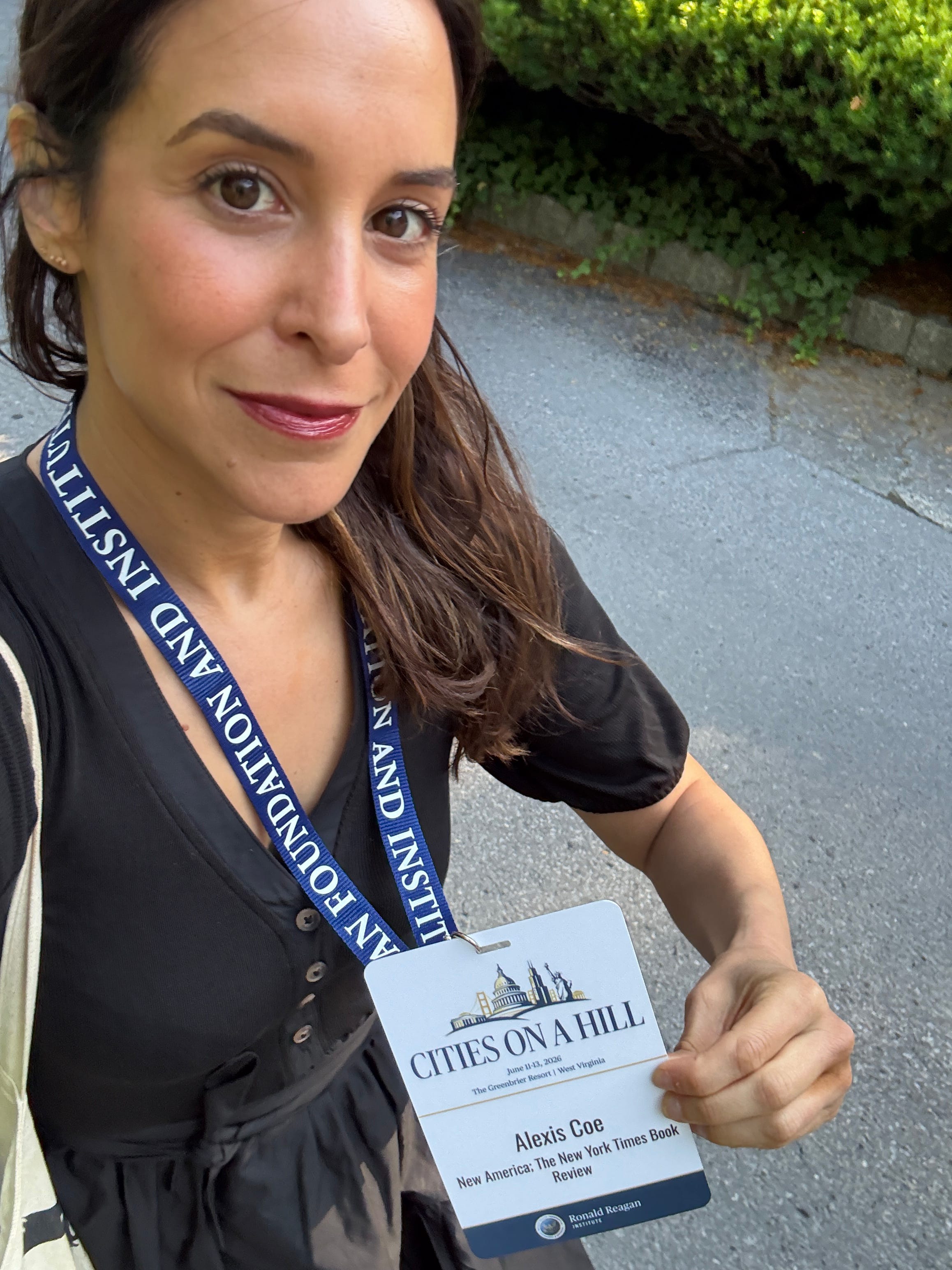
Last month, I attended the inaugural gathering of think tank fellows, Pulitzer Prize winners, public historians, and a few people who resist any neat label, at the Greenbrier in Sulphur Springs, West Virginia.
The meeting operated under Chatham House Rules: participants are free to discuss the ideas exchanged, which I’ll do here, but not identify who expressed them. The premise is that anonymity encourages candor and, more interestingly, it strips away the usual cues that help us decide what to think by removing the biography.
After nearly sixty hours of papers, debate, disagreement, and consensus among people and institutions that rarely share a room, it was my turn. Alongside the head of a major cultural institution, I was asked to summarize and comment on everything we’d covered. No pressure.
Over the next few weeks, I’ll share some of the questions we felt best represented our time at Greenbriar. None are new but, like iron filings to a magnet, every conversation seemed to find its way back to them.
How can history itself sustain civic life in a democratic society?
Nearly every essay eventually arrived at the same question: what are historians for?
Museums, monuments, historic sites, road trips, journalism, documentaries, podcasts, classrooms, anniversaries, and civic rituals all perform different versions of the same work when they function well. They give people a shared vocabulary for talking about conflict, change, responsibility, and belonging without having to reinvent the conversation every generation.
Public history turns the past into something people can encounter together. Journalism and other forms of storytelling carry scholarship beyond the academy, expanding who gets to participate in the discussion. Schools, commemorations, and civic rituals use the past to teach civic habits: how to remember, whom to honor, what to mourn, and increasingly, whose stories belong in the first place.
At their best, historians model something increasingly rare. They show how to argue from evidence rather than instinct, how to revise a position without surrendering conviction, and how to hold complexity without retreating into cynicism.
History helps citizens understand themselves as part of a longer story—unfinished, contested, and inherited—and reminds them that they bear some responsibility for whatever comes next. It provides orientation—not answers.
See you soonish! In the meantime, you can find me on Instagram and, on occasion, Bluesky and Twitter. My books are at Bookshop, Amazon, and your local bookstore or library. If you’d like me to sign or personalize my books, purchase copies from Oblong Books.