
How Do You Like Them Apples: When Gordon Wood (1933-2026) Met the 1619 Project
In trying to discredit the project, Wood became one of its most effective publicists.

Prestige remains stubbornly non-fungible despite widespread agreement that it really should be.
Accordingly, readers should support independent historical analysis by subscribing below.
Or Venmo me directly, as the founders intended.

How Do You Like Them Apples: When Gordon Wood Met the 1619 Project
 Tiktok failed to load.
Enable 3rd party cookies or use another browser
Last weekend, historian Gordon S. Wood, whose work shaped how a generation of scholars understood what the founders thought they were doing—and how badly some of it went sideways—was struck by a car in a supermarket parking lot in East Providence, Rhode Island. Wood, 92, died later that day.


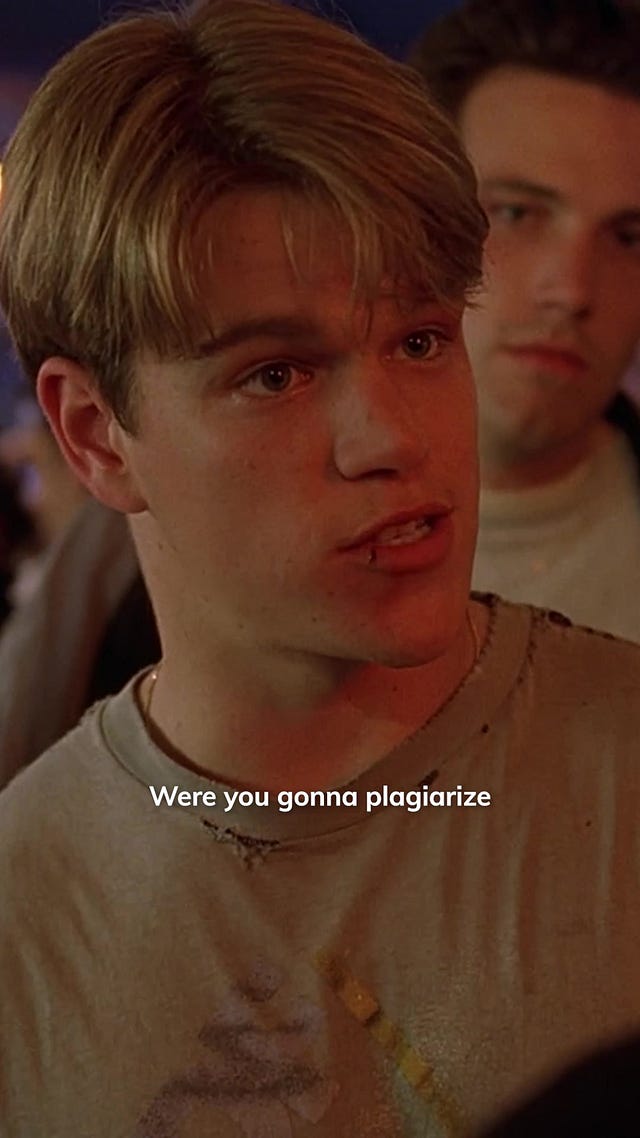
Had the 1619 Project not lured him into a final historiographical battle that did not go his way, Wood would be best remembered outside of his books as the historian who Matt Damon name drops in Good Will Hunting. (Wood found this mildly amusing and mostly beside the point, which is fitting for one of the defining interpreters of the American Revolution.)
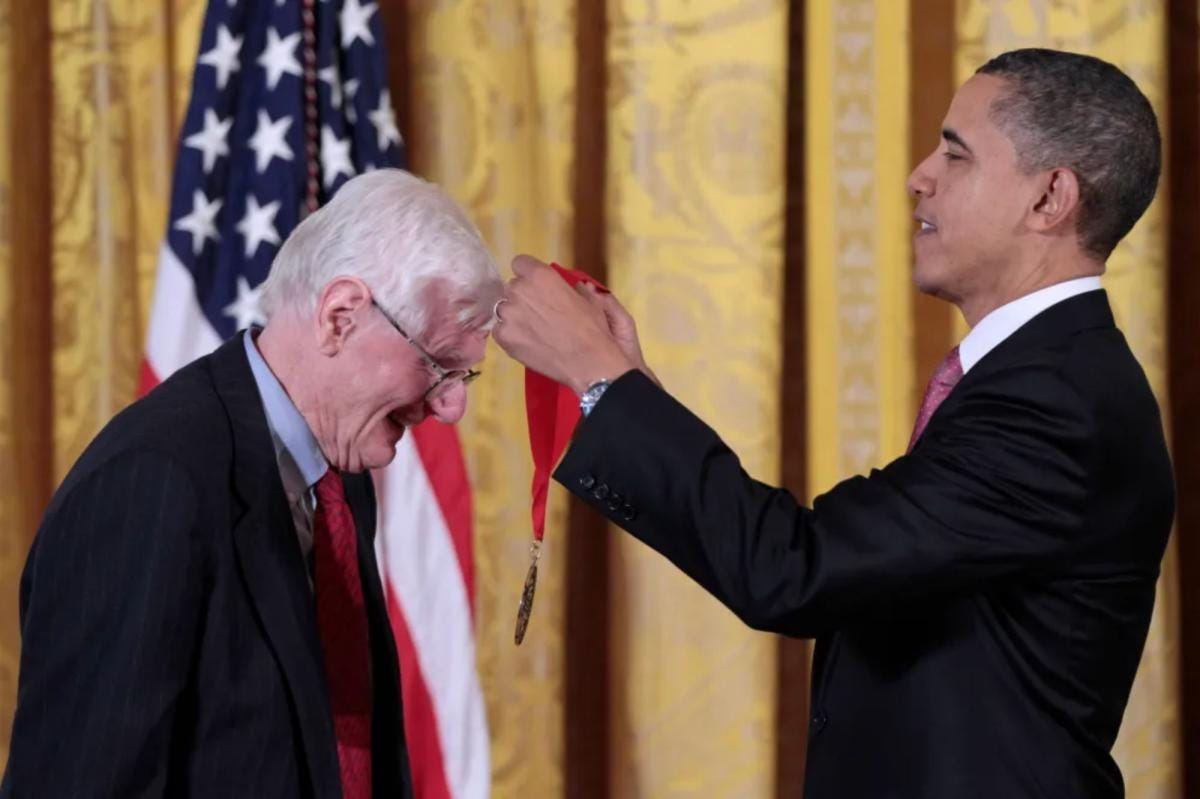
So did my impression of him. Wood, along with several other eminent historians, pushed back hard against the 1619 Project’s emphasis on slavery as the Revolution’s central story, arguing it diminished the genuine democratic transformation he had spent his career documenting.
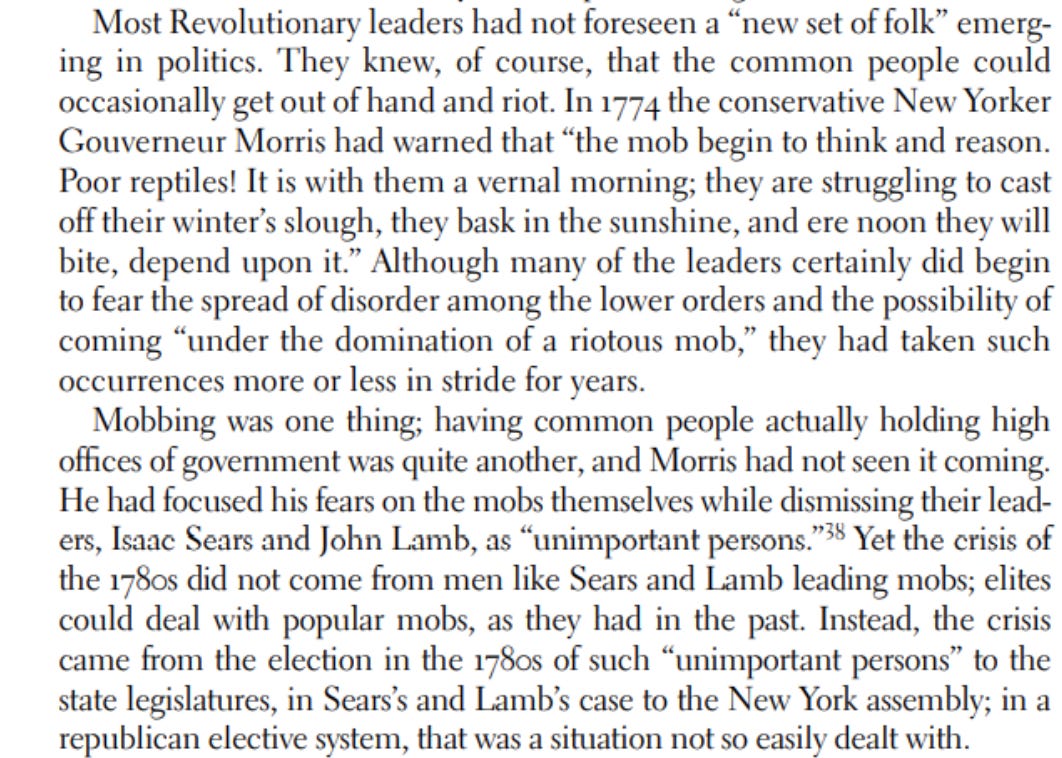
Many of his arguments were stunningly flimsy, and he was determined to demonstrate exactly how flimsy they were in the public square. Wood later claimed that historian Woody Holton had "blindsided" him during a Massachusetts Historical Society debate, a remarkable assertion given that Holton, at the time, had dedicated much of his twitter to the subject. The debate was, in Wood’s words, “a disaster.” One observer described him as having been “reduced to defensive sputtering.”
It was a rather heartbreaking example of how historiography works: An argument enters the room, rearranges the furniture, and forces everyone to find new footing. Wood spent decades advancing one interpretation of the Revolution, and then the 1619 Project arrived and recentered the story around the people the founders had conspicuously failed to liberate. Wood was doing what he understood to be his job, albeit poorly, and with a long list of white men with whom he wrote open letters with.


Big feelings aside, that’s the discipline working as intended. The 1619 Project’s claims were stress-tested in public. Wood was forced to grapple with a version of the Revolution that his framework had not fully accommodated. There’s no denying that both sides emerged sharper for it.
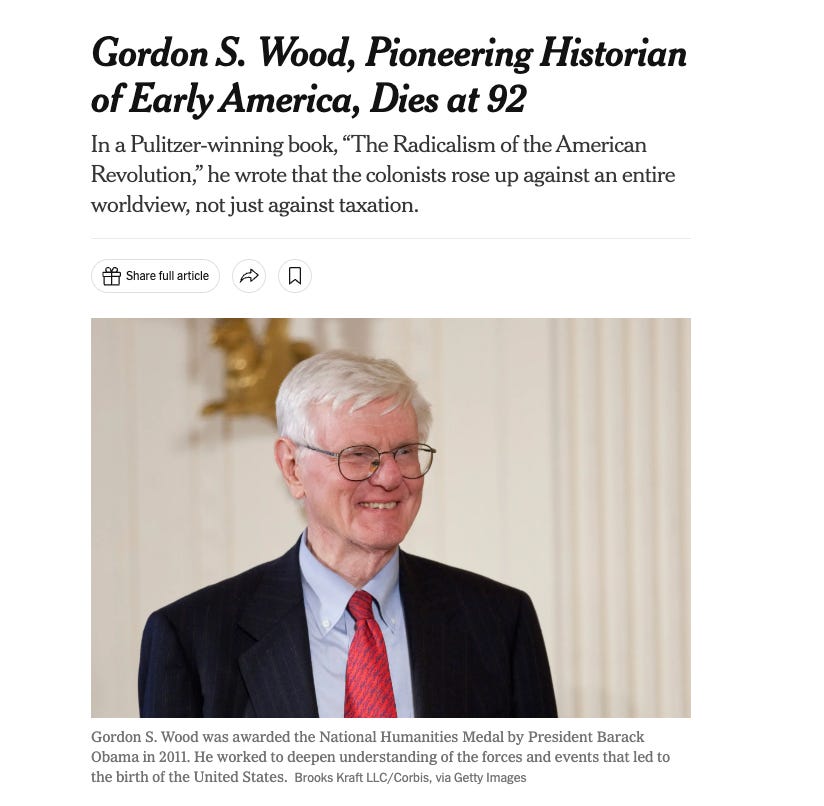
And there’s an irony here: In trying to discredit the project, Wood became one of its most effective publicists.
Humans can be shockingly wrong about some things and luminously right about others. And the older I get, the more I realize that people are rarely remembered for the arguments they won, but rather the arguments they can’t stop having. That’s Wood, as his obituaries confirm.
See you soonish! In the meantime, you can find me on Instagram and, on occasion, Bluesky and Twitter. My books are at Bookshop, Amazon, and your local bookstore or library. If you’d like me to sign or personalize my books, purchase copies from Oblong Books.
The historian who moderated the debate, Catherine Allgor, stated she had explicitly discussed with Gordon Wood that the topic would be raised. Glad my friend Woody Holton and his students documented just how widespread the fear among Virginians was of Britain abolishing slavery via Lord Dunmore. Was hoping Gordon Wood made it to this July 4 and the 250th, just as Jefferson and Adams survived until the 50th anniversary.
This post is in incredibly poor taste