
Reply Some: Distract and Conquer
Diversion is a tactic. Math is a condition.

Upcoming Events
March 11, 7pm. NYPL in Bryant Park: In conversation with Bob Crawford.
April 12, 1pm. Mills Mansion in Staatsburg, NY: Keynote on Anne Morgan.
April 14, 5pm. Miami University in Oxford, Ohio: The Annual McClellan Lecture, cosponsored by the History Department and the Menard Family Center for Democracy.
April 15, 6pm. The Mercantile Library in Cincinnati, Ohio: The 1835 Lecture.
Reply Some: Distract and Conquer
Reply Some is a recurring dispatch in which I selectively respond to your questions and comments.
Joe in Tuscon, Arizona wants to know:
With the news focused on Iran, will Trump’s numbers soar?
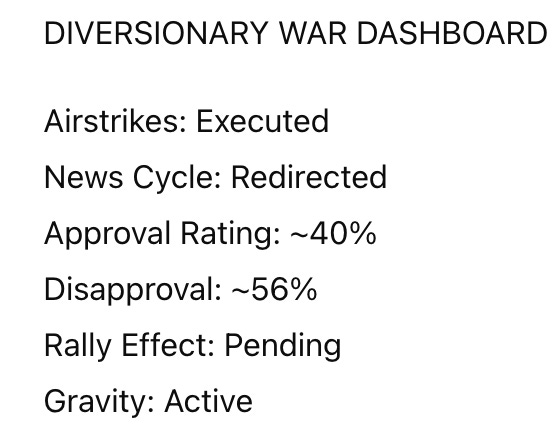
There’s much atwitter about whether Trump has successfully shifted the news cycle from Epstein to U.S.–Israeli airstrikes on Iran. But in the longterm, do diversionary war tactics boost presidential approval ratings?
The most recent, most dramatic, and most politically formidable example: George W. Bush. No president in living memory experienced a rally effect like his.
Pre-9/11: ~51%
Within days: ~85%
Peak: 90% — the highest recorded presidential approval in modern polling.
Then came Iraq. Approval climbed again at the start of the war — from roughly 58% to 71%. Significant. Real. But smaller. And then the slide began.
By 2008, Bush bottomed out around 25%. The rally was historic. The erosion was, too.
Political scientists call the phenomenon “rally ’round the flag:” when the nation perceives a foreign threat or crisis, approval for the president can tick upward in the short term. That’s been observed repeatedly in the United States — from spikes during the Cuban Missile Crisis and after the 1979 Iran Hostage Crisis, to the stunning surge for George W. Bush after 9/11.
The historical record on diversionary wars is less impressed.
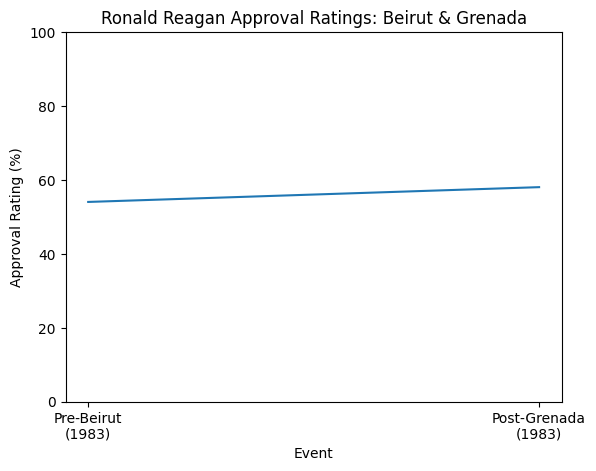
In 1983, Ronald Reagan weathered the backlash from the Beirut barracks bombing with a short, well-framed intervention in Grenada that produced a measurable, if modest, bump. But even there, the boost reinforced a narrative rather than rewrote public sentiment.
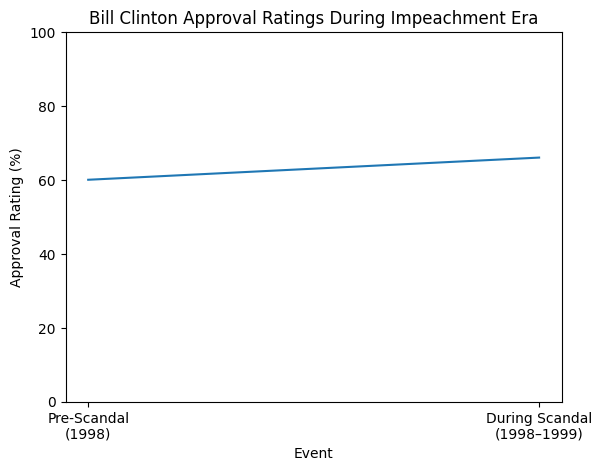
And during the Bill Clinton impeachment era, approval rose not because of 1998 airstrikes but because voters were comfortable separating personal scandal from performance — especially when the economy was strong.
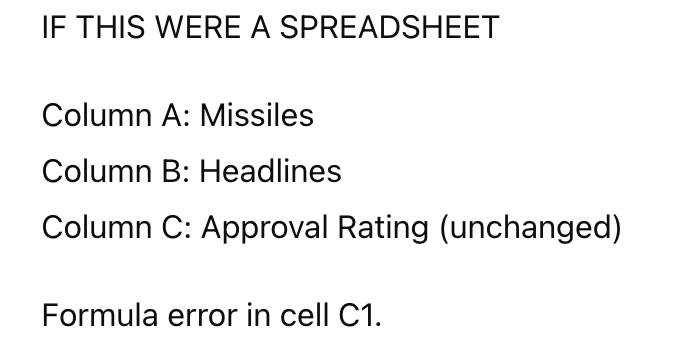
External crises can create short-term cohesion, but those bumps are uneven, often short-lived, and rarely enough to rescue a presidency in trouble. They depend on how the public perceives the threat, how coherent the justification seems, and how quickly the situation resolves — variables that are far from guaranteed in a sprawling, weeks-long regional conflict.
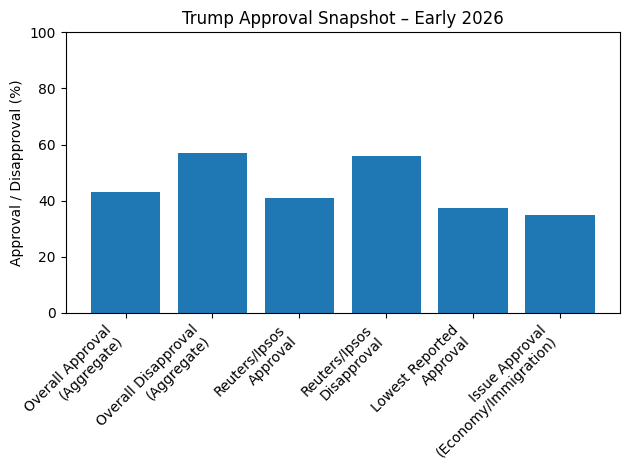
So yes, military action can lift approval briefly. But you can’t bomb your way out of political trouble and stay popular: rallies are conditional, often brief, and no match for a long, ugly war or a scandal that won’t quit.
The rhetoric may be loud but history tells us it’s rarely lasting


See you soonish! In the meantime, you can find me on Instagram and, on occasion, Bluesky and Twitter. My books are at Bookshop, Amazon, and your local bookstore or library. If you’d like me to sign or personalize my books, purchase copies from Oblong Books.